Essential Oil Insights
How to Determine Essential Oil Purity?
Learn how to assess essential oil purity using GC-MS, physical properties, COAs, heavy metal and microbial tests, while identifying common adulteration.
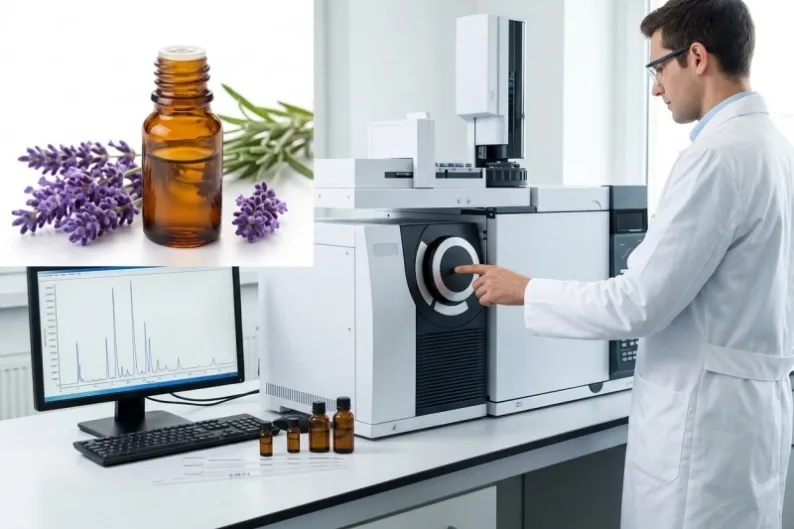
When purchasing essential oils, customers often ask, “What is the purity of this essential oil raw material?” Unlike a single chemical substance, however, a natural essential oil contains dozens or even hundreds of compounds. Its quality usually cannot be accurately described with a simple figure such as “99% pure.”
To determine whether an essential oil is authentic and meets quality requirements, buyers should evaluate its GC-MS profile, physicochemical properties, sensory characteristics, and contaminant test reports.
1. GC-MS: An Essential Tool for Purity Assessment
GC-MS, or gas chromatography–mass spectrometry, separates and identifies the volatile compounds in an essential oil. A GC-MS report generally lists the detected compounds and their relative percentages. For example, important constituents may include linalool and linalyl acetate in lavender oil or terpinen-4-ol in tea tree oil.
Assessing purity requires more than checking the percentage of one major compound. The complete chromatographic profile should be compared with applicable standards, historical batch data, or a verified reference sample. Unexpected peaks, abnormal ratios between key constituents, or synthetic substances not normally found in the oil may indicate adulteration, reconstruction, or excessive processing.
It is important to note that the GC-MS peak area percentage does not equal the absolute purity of the entire essential oil. Purity percentages are more appropriate for isolated aroma chemicals, such as menthol or linalool. For natural essential oils, it is generally more accurate to state that the product complies with a recognized standard or specification.
2. Common Purity and Quality Indicators
In addition to the GC-MS chemical fingerprint, the following indicators are commonly used to evaluate essential oil quality:
- Relative density, refractive index, and optical rotation: Each essential oil has an expected range. Abnormal results may suggest the addition of solvents, carrier oils, or cheaper essential oils.
- Color, odor, and clarity: These characteristics can reveal oxidation, sediment, contamination, or batch irregularities, but should not be used as the only evidence of purity.
- Solubility, acid value, and peroxide value: Depending on the product, these tests may help assess stability, oxidation, and overall condition.
- Key constituent ranges: Major compounds and chemical markers should comply with ISO standards, pharmacopoeial requirements, or the supplier’s approved specification.
- Pesticide residues, residual solvents, and plasticizers: These tests may be required depending on the botanical source, extraction process, intended application, and destination market.
A reliable supplier should normally provide a batch-specific Certificate of Analysis (COA), product specification, and GC-MS report. The product name, batch number, and testing date shown in the documents should match the delivered goods.
3. How Are Heavy Metal and Microbial Reports Provided?
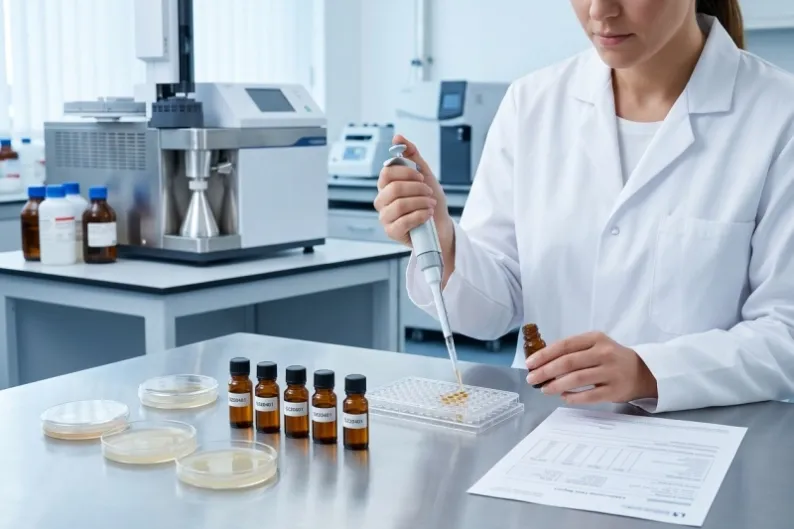
Customers who need information about lead, arsenic, cadmium, and mercury can request a heavy metal test report for the relevant batch. Common analytical methods include ICP-MS and ICP-OES. A complete report should clearly state the testing method, detection limits, results, units, and acceptance criteria.
Because essential oils contain very little water, most microorganisms cannot easily grow in them. However, this does not mean microbial testing is always unnecessary. For essential oils intended for cosmetics, food, pharmaceuticals, or aromatherapy products, testing may be conducted according to applicable regulations and customer requirements.
Common microbial parameters include:
- Total aerobic microbial count
- Yeast and mold count
- Escherichia coli
- Staphylococcus aureus
- Other specified microorganisms, where required
Heavy metal and microbial reports may be issued by the supplier’s laboratory or by a qualified independent testing laboratory. Buyers should confirm whether a document is a batch-specific report or a typical report. A typical report only demonstrates the product’s usual quality level and may not represent the batch currently being supplied.
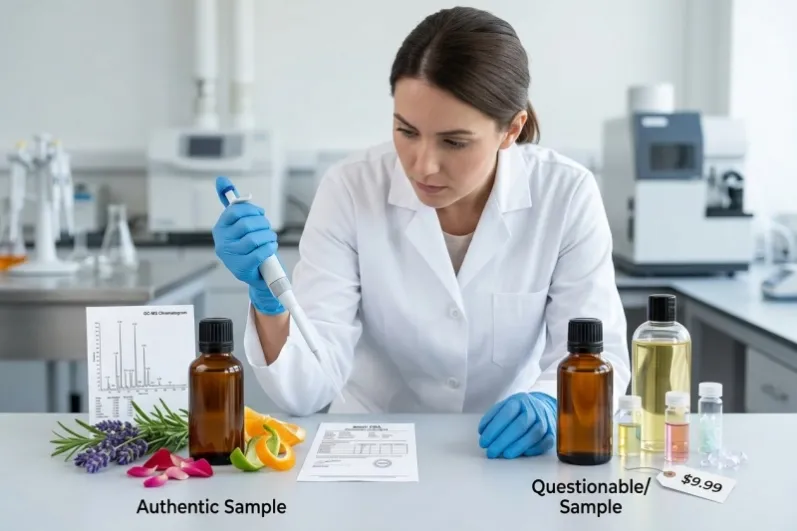
4. How Can Buyers Identify Adulterated Essential Oils?
Common adulteration methods include adding carrier oils, alcohol, synthetic aroma chemicals, or cheaper essential oils. Buyers should first consider whether the price is significantly below a reasonable market level. They should also verify the botanical name, plant part used, country of origin, and extraction method.
Smelling the oil, placing a drop on paper, or observing its evaporation rate can provide limited clues, but these methods cannot reliably prove purity. Some authentic essential oils naturally contain dark-colored or slow-evaporating compounds, so a visible mark on paper does not necessarily mean that a carrier oil has been added.
For high-value essential oils, more advanced techniques may be necessary. Chiral chromatography can help identify abnormal enantiomer ratios, while stable isotope analysis and carbon-14 testing may distinguish naturally derived compounds from synthetic alternatives.
Ultimately, the most reliable way to assess essential oil purity is to review the supplier’s qualifications and evaluate the batch COA, GC-MS profile, physicochemical data, and relevant third-party test reports together. A marketing claim such as “100% natural” should never replace documented quality evidence.
Which indicator matters most to you when purchasing essential oils—GC-MS, heavy metals, or microbial limits? Let us know which essential oil you would like to examine next.