Essential Oil Insights
Essential Oil Shelf Life: A B2B Guide
A B2B guide to essential oil shelf life, oxidation rates, use after opening, storage, packaging, retesting, and inventory quality control.
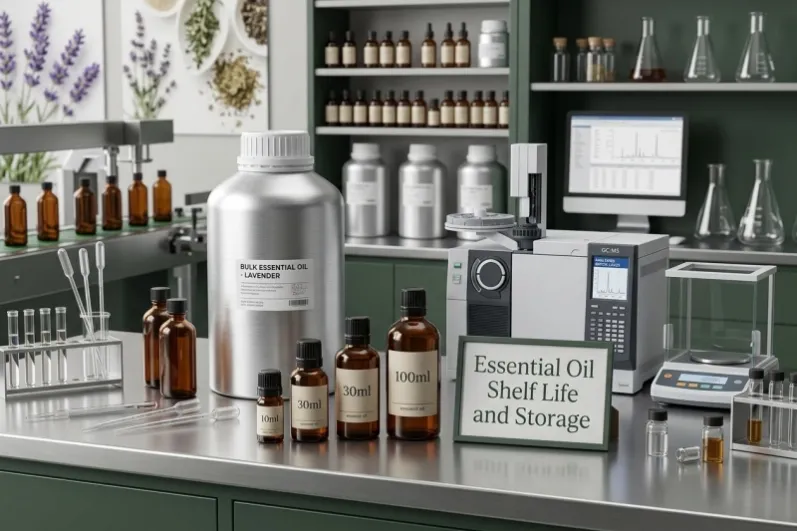
For essential oil brands, cosmetics manufacturers, fragrance companies, and raw material buyers, shelf life affects not only product performance but also inventory management, production planning, and finished-product quality. Common questions include: How long can essential oil raw materials be stored? What is the shelf life of bottled essential oils? How soon should they be used after opening? Do they need to be protected from light?
There is no single shelf-life standard for all essential oils. It should be assessed according to the type of oil, production process, packaging, storage conditions, and available stability data.
1. How Long Do Unopened Essential Oils Last?
When kept in intact packaging and stored under recommended conditions, most pure essential oils have a labeled shelf life of approximately two to three years. However, this is only a general range and does not apply to every product.
Suppliers and finished-product manufacturers should establish shelf life based on the characteristics of the oil, packaging compatibility, and stability assessments. The production date, batch number, expiration date, and storage requirements should be stated on the product label, specification sheet, or Certificate of Analysis (COA). Buyers should follow official supplier documentation and product labels rather than relying solely on general assumptions about a particular oil category.
An essential oil does not necessarily become unusable immediately after its labeled expiration date. However, its aroma, key chemical constituents, and safety profile may gradually change. For industrial production, expired raw materials should not be approved based only on odor. If an extension is considered, the material should be retested and evaluated according to the company’s quality management procedures.
2. Oxidation Rates Vary by Essential Oil Type
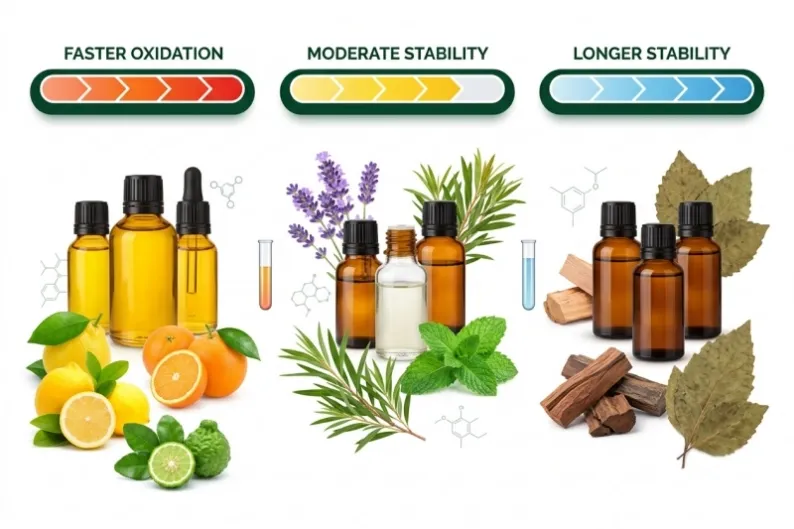
Different essential oils have different chemical compositions and therefore vary significantly in stability.
Citrus Essential Oils
Citrus oils such as lemon, sweet orange, grapefruit, lime, and bergamot generally contain high levels of limonene. They oxidize relatively quickly when exposed to air, light, or heat. Unopened citrus oils are commonly recommended for use within one to two years, while opened oils should ideally be used within six to twelve months.
Oxidized citrus oils may develop a dull aroma, darker color, and increased peroxide levels. When used in skincare products, oxidation may also increase the risk of irritation or sensitization. Businesses should therefore align purchasing quantities with production plans and avoid maintaining excessive citrus oil inventory.
Floral, Herbal, and Leaf Essential Oils
Common oils such as lavender, tea tree, eucalyptus, rosemary, and peppermint generally have an unopened shelf life of around two to three years when stored appropriately. After opening, they should usually be used within one to two years.
The exact period should still be assessed using relevant data, such as the GC-MS profile, changes in key constituents, acid value, and peroxide value.
Woody, Root, and Certain Resinous Essential Oils
Essential oils such as cedarwood, sandalwood, patchouli, and vetiver generally oxidize more slowly. Under suitable packaging and storage conditions, some may remain stable for four to six years or longer and may also retain good stability after opening.
However, the belief that these oils “improve with age” does not mean they can be stored indefinitely. For commercial production, companies should still follow the supplier’s stated expiration date and regularly retest long-term inventory.
3. How Is the Shelf Life of Bottled Essential Oil Products Determined?
The shelf life of a bottled finished product should not be based solely on the shelf life of the original essential oil. It is also affected by the bottle material, cap and insert seal, filling conditions, headspace oxygen, and transportation environment.
Bottled pure essential oil products commonly carry a shelf life of two to three years. However, diluted essential oils, massage oils, and blended body oils containing carrier oils may have a shorter shelf life determined by the least stable ingredient in the formula. Plant oils such as grapeseed and sweet almond oil can also oxidize, so the shelf life of these products should not be based on pure essential oil guidelines.
Finished-product manufacturers can use accelerated stability testing, long-term stability studies, and packaging compatibility testing to support shelf-life determination. Products intended for cosmetics, food, or other regulated applications must also comply with the labeling and regulatory requirements of the target market.
4. How Should Opened Essential Oil Raw Materials Be Managed?
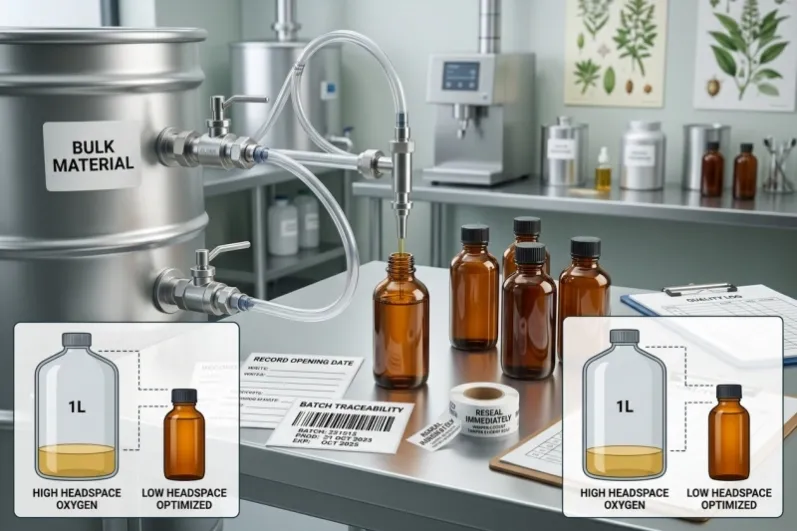
Businesses should record the opening date on each essential oil container and establish an internal period-after-opening requirement. Containers should be resealed immediately after dispensing to minimize prolonged exposure to air.
When only a small quantity remains in a large container, the increased headspace may accelerate oxidation. Subject to the company’s quality procedures, the remaining oil may be transferred to a clean, dry, appropriately sized dark-colored container. The original product name, batch number, transfer date, and expiration date must remain fully traceable. The transfer process should also prevent moisture, dust, and cross-contamination.
Essential oils that have been open for an extended period or show signs of change may be retested for their GC-MS fingerprint, relative density, refractive index, optical rotation, acid value, or peroxide value before a release decision is made.
5. Do Finished Essential Oil Products Need Protection from Light?
Essential oils should generally be stored away from light and heat, in tightly sealed containers, and under dry conditions.
Amber, dark blue, or other dark-colored glass bottles are recommended to reduce the effects of light on product stability. Warehouses should be cool, dry, and maintained at a relatively stable temperature. Products should be protected from direct sunlight and kept away from boilers, heaters, and high-temperature equipment. Prolonged exposure to heat during transportation should also be avoided.
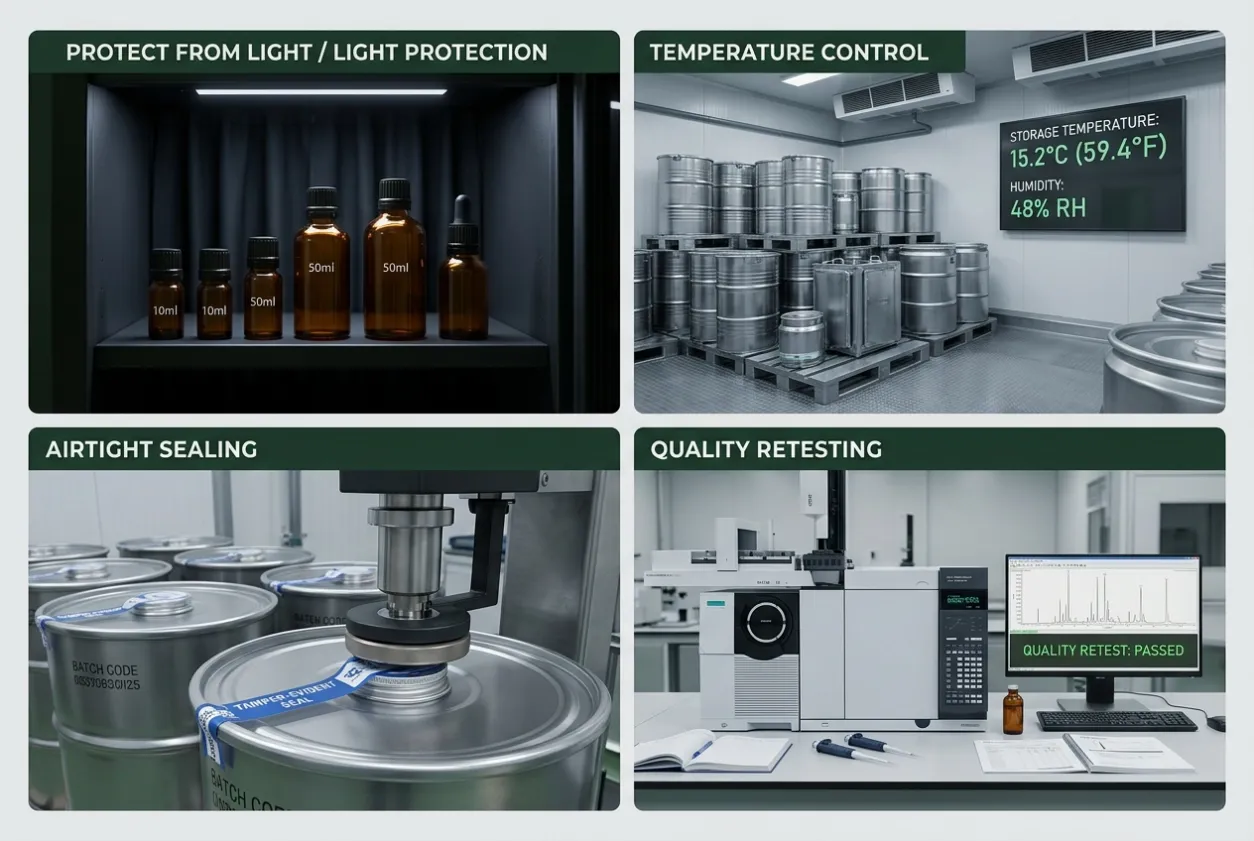
If citrus oils require refrigeration, the packaging must remain tightly sealed, and condensation risks should be controlled when the containers are removed from cold storage. Unless specifically required by the supplier, essential oils should not be frozen. Storage temperatures should follow the product specification or the supplier’s recommendations.
In summary, essential oil shelf-life management should not rely on a single fixed number. Companies should evaluate the oil type, opening date, packaging format, storage environment, and test results while maintaining clear batch traceability and inventory controls.
When sourcing essential oils, does your company prioritize unopened shelf life, period after opening, or stability test documentation? Share the oil type and intended application so that suitable storage and quality-control measures can be developed.