Essential Oil Insights
How Are Essential Oils Produced?
Learn how essential oils are produced—from harvesting and extraction to filtration, testing, and storage—and how each step affects their aroma, purity, and quality.
Essential oils are not made by simply soaking plants in oil. They are concentrated aromatic substances extracted from flowers, leaves, fruit peels, wood, roots, rhizomes, or resins. Because each plant has different aromatic compounds, the right harvesting time and extraction method are important for preserving its natural scent and characteristics.
Step 1: Harvesting and Preparing the Plants
Essential oil production begins with selecting the right botanical materials. For example, lavender oil is mainly made from flowering tops, rosemary oil from leaves and young stems, citrus oils from fruit peels, sandalwood oil from wood, and frankincense oil from resin.
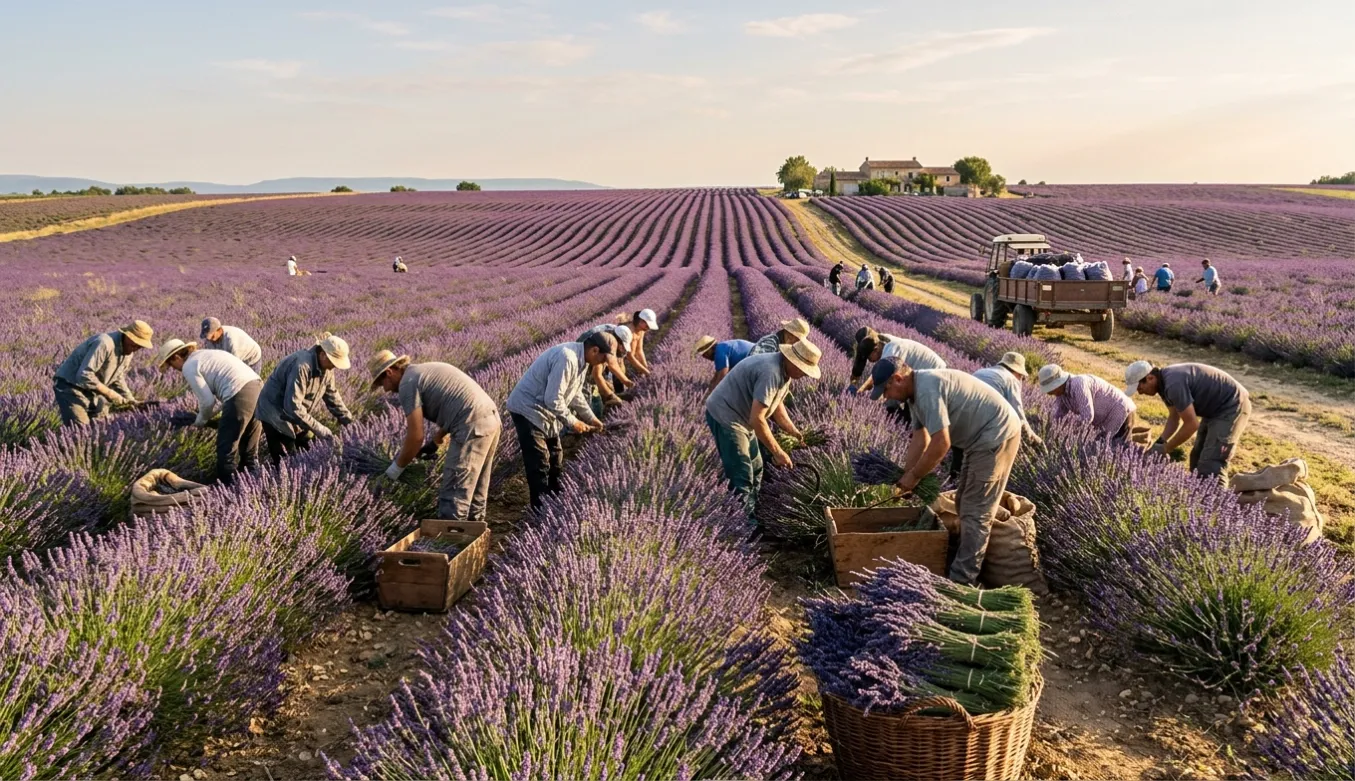
Harvesting time can directly affect the aroma and oil yield. Some flowers are best picked in the morning, while certain herbs should be harvested when their aromatic compounds are at their highest level.
After harvesting, the plant materials are sorted and cleaned. Depending on the plant and production method, they may also be cut, crushed, or partially dried before extraction.
Step 2: Extracting the Aromatic Compounds
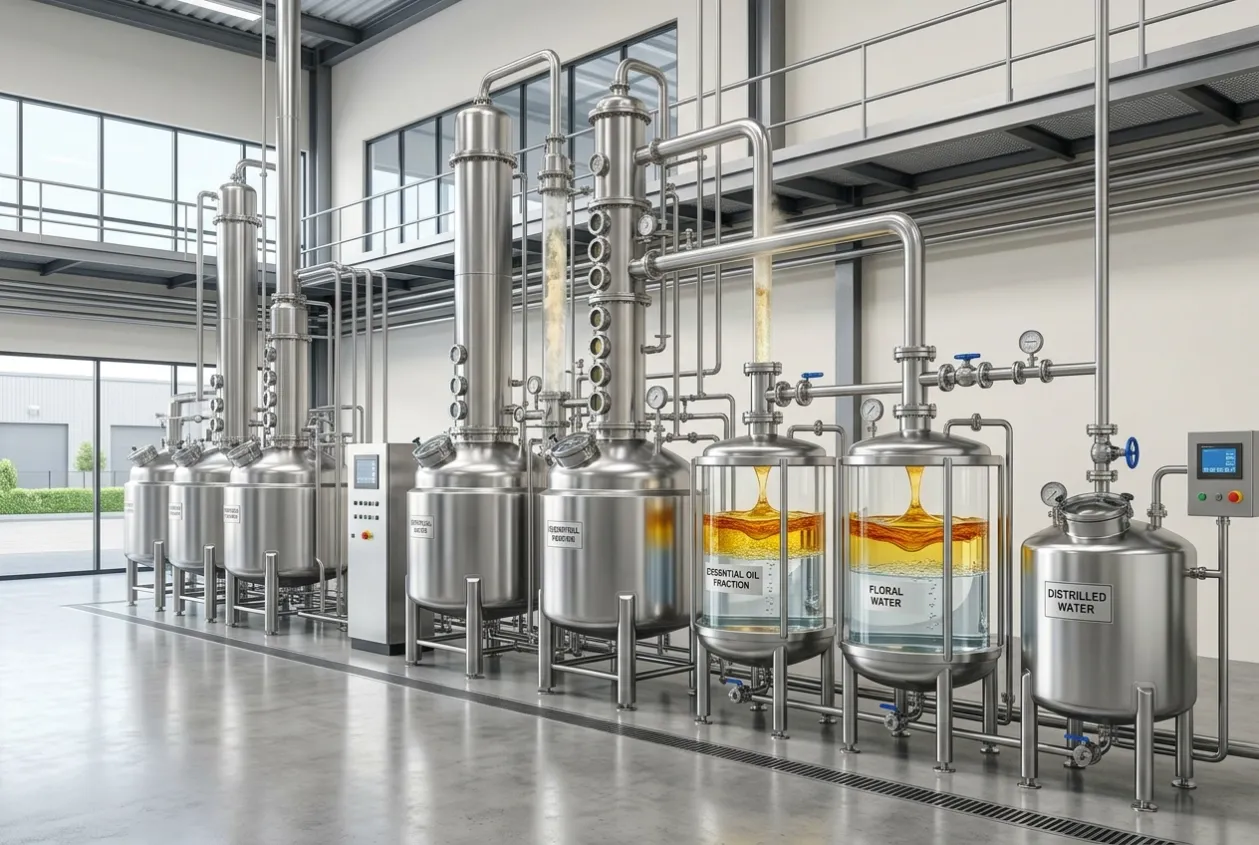
Steam distillation is the most common method used to produce essential oils. It is suitable for plants such as lavender, peppermint, tea tree, rosemary, and eucalyptus.
During this process, steam passes through the plant material and carries the volatile aromatic compounds into a condenser. The vapor is then cooled back into liquid and transferred to an oil-water separator. Because essential oil and water have different densities and do not fully mix, they form separate layers. The oil layer is collected as essential oil, while the remaining aromatic water may be used as a hydrosol.
Citrus oils, such as sweet orange, lemon, and grapefruit, are usually produced by cold pressing. Machines puncture or press the fruit peel to break its oil glands. The essential oil is then separated from water and peel particles through filtration, settling, or centrifugation. This method helps preserve the fresh and bright aroma of citrus peel.
Delicate flowers such as jasmine and osmanthus may not tolerate high temperatures. They are often processed through solvent extraction to create rich, highly aromatic absolutes. Some premium botanicals can also be processed using supercritical CO₂ extraction, which helps retain a wider range of aromatic and oil-soluble compounds.

Step 3: Filtering, Testing, and Storage
Freshly extracted essential oils are usually filtered to remove moisture and fine particles. Some oils are also allowed to settle or mature for a period so that their aroma can become more stable.
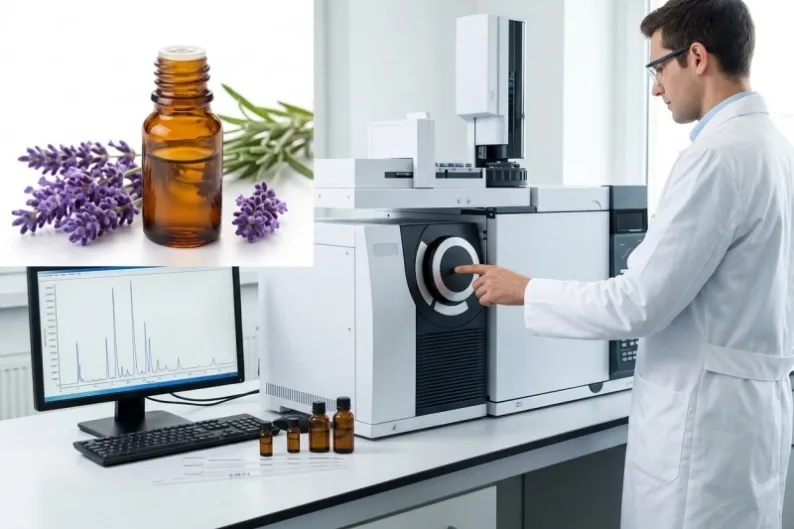
Manufacturers then test the oil’s appearance, color, odor, density, refractive index, and chemical composition. GC/MS analysis may also be used to identify key components and confirm batch quality.
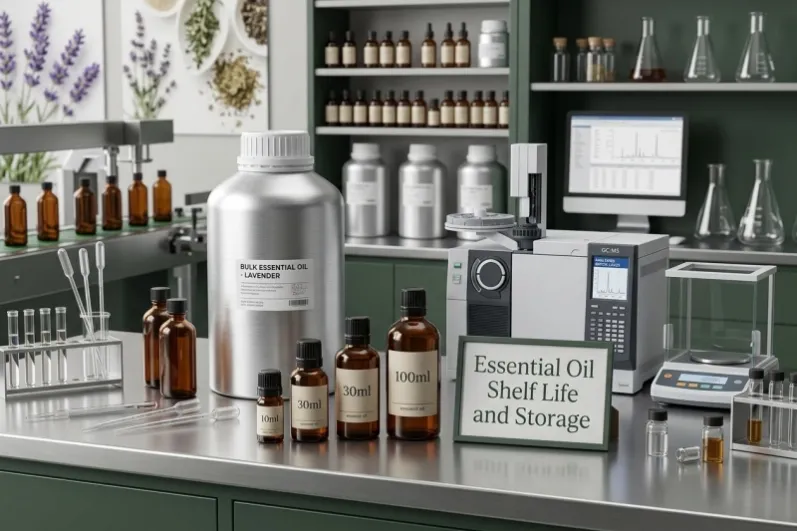
After passing quality checks, essential oils are sealed in dark glass bottles, aluminum drums, or other suitable containers. They should be stored away from sunlight, heat, oxygen, and moisture. Citrus oils require particular care because they can oxidize more easily after opening.
From a plant to a finished bottle, essential oil production involves harvesting, preparation, extraction, separation, filtration, testing, and storage. The botanical variety, origin, climate, and processing conditions can all affect the final quality. This is also why natural essential oils may show small differences from one batch to another.
Which essential oil production process would you like to learn about next—lavender, lemon, tea tree, or frankincense? Let us know, and we may feature it in our next article.