Essential Oil Insights
How Are Essential Oils Classified? How To B2B Sourcing ?
This guide explains essential oil classifications by plant part, aroma, extraction method, and product form, plus key B2B sourcing, quality, safety, and private-label considerations.
Essential oils are widely used in aromatherapy, skincare, hair care, massage products, perfumes, and home fragrances. For brands, wholesalers, importers, and product developers, understanding their classification supports better ingredient selection, formulation, cost control, product claims, and market positioning.
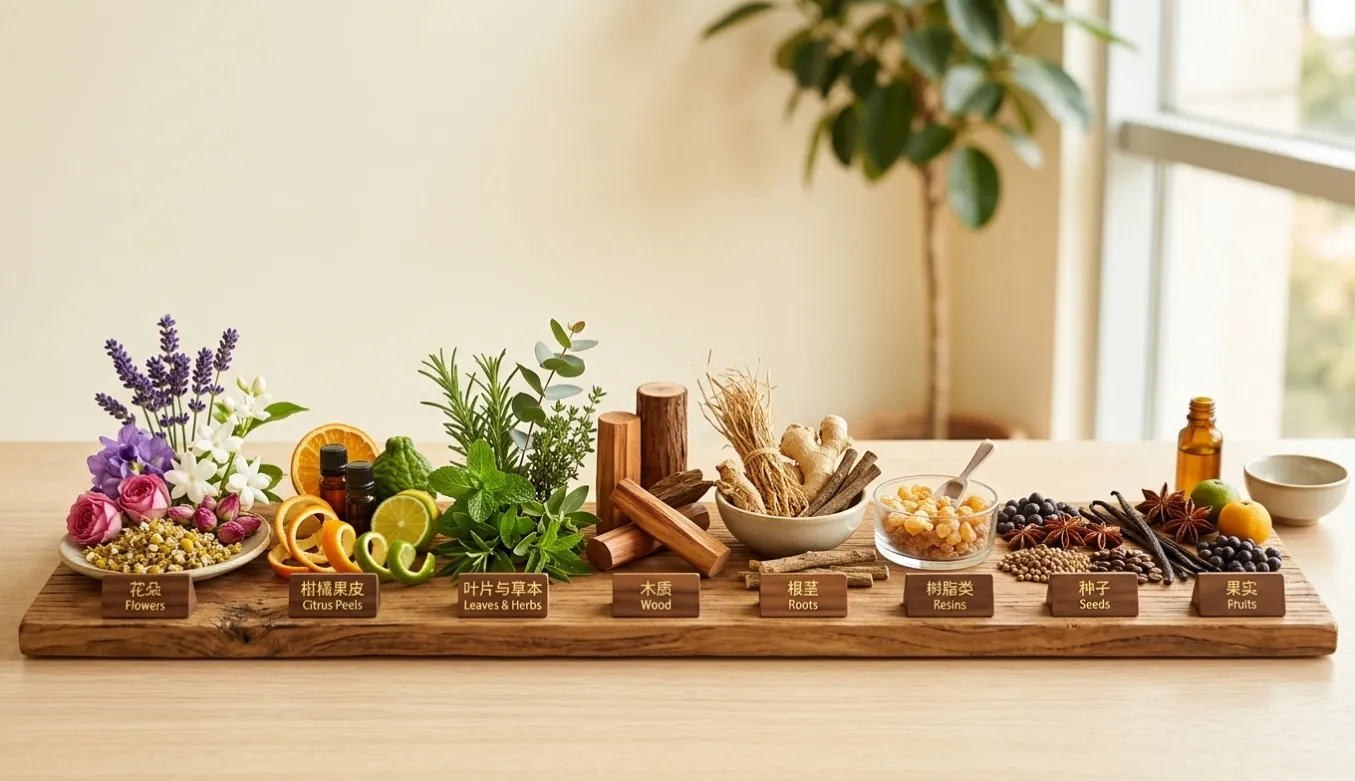
1.Classification by Plant Part
Different plant parts contain different aromatic compounds, affecting scent, price, performance, and application.
Flowers: Rose, jasmine, lavender, ylang-ylang, and chamomile offer soft or rich floral aromas. They are commonly used in perfumes, facial care, body oils, and premium aromatherapy products. Low-yield flowers may be expensive and are often positioned for luxury ranges.
Citrus peels: Sweet orange, lemon, bergamot, grapefruit, and lime provide bright, fresh scents. They suit bath products, lotions, cleansers, massage oils, and home fragrances. Buyers should consider oxidation, storage conditions, and the potential phototoxicity of certain citrus oils.
Leaves and herbs: Tea tree, eucalyptus, peppermint, rosemary, thyme, and patchouli are popular in scalp care, hair products, foot care, massage blends, and refreshing aromatherapy ranges.
Woods: Sandalwood, cedarwood, and rosewood have warm, deep, long-lasting aromas. They are often used as perfume base notes and in men’s grooming or premium wellness products. Sustainability, botanical origin, and traceability are important sourcing considerations.
Roots and rhizomes: Ginger, turmeric, and vetiver offer spicy, earthy, or smoky notes suitable for massage products, body care, perfumes, and distinctive blends.
Resins: Frankincense and myrrh have deep, balsamic aromas and are suitable for fragrance, facial care, and traditional or premium wellness concepts.
Seeds and fruits: Black pepper, fennel, coriander seed, and cardamom provide characteristic spicy notes for massage oils, perfumes, and men’s care products.
2. Classification by Aroma Family
Aroma families help buyers plan fragrance collections and develop balanced blends:
Floral: Rose, jasmine, lavender, ylang-ylang
Citrus: Orange, lemon, bergamot, grapefruit
Herbal: Rosemary, peppermint, thyme, sage
Woody: Sandalwood, cedarwood, rosewood
Spicy: Ginger, clove, cinnamon, black pepper
Resinous: Frankincense, myrrh
Earthy: Patchouli, vetiver
Citrus notes can brighten floral compositions, while woody and resinous notes add warmth, depth, and perceived longevity.
3.Classification by Extraction Method
Steam distillation: Commonly used for lavender, tea tree, rosemary, peppermint, and eucalyptus. It is widely available and suitable for regular or large-volume purchasing.
Cold pressing: Mainly used for citrus peels. It preserves a fresh peel aroma, but the oil may be sensitive to heat, light, oxygen, and oxidation.
Solvent extraction: Used for delicate flowers such as jasmine and osmanthus. The resulting material is usually called an absolute and is valued for its rich, realistic floral scent.
Supercritical CO₂ extraction: Retains a broad range of aromatic and oil-soluble botanical compounds. CO₂ extracts are often used in premium skincare, fragrance, and specialty products, although costs are generally higher.
4.Classification by Commercial Form
B2B buyers should confirm exactly what a supplier is offering:
Single essential oils: Derived from one botanical source.
Essential oil blends: Combine two or more oils for concepts such as relaxation, refreshing diffusion, massage, or scalp care.
Diluted essential oils: Mixed at a defined percentage with carrier oils such as jojoba, sweet almond, coconut, or grapeseed oil.
Aromatherapy or fragrance oils: These may contain synthetic fragrance materials, solvents, or other ingredients and should not automatically be labeled “100% pure essential oil.”
Finished treatment oils: Combine carrier oils, essential oils, extracts, and vitamins for body, massage, or hair care. They are suitable for OEM, ODM, and private-label projects.
5.Essential Oils vs. Carrier Oils
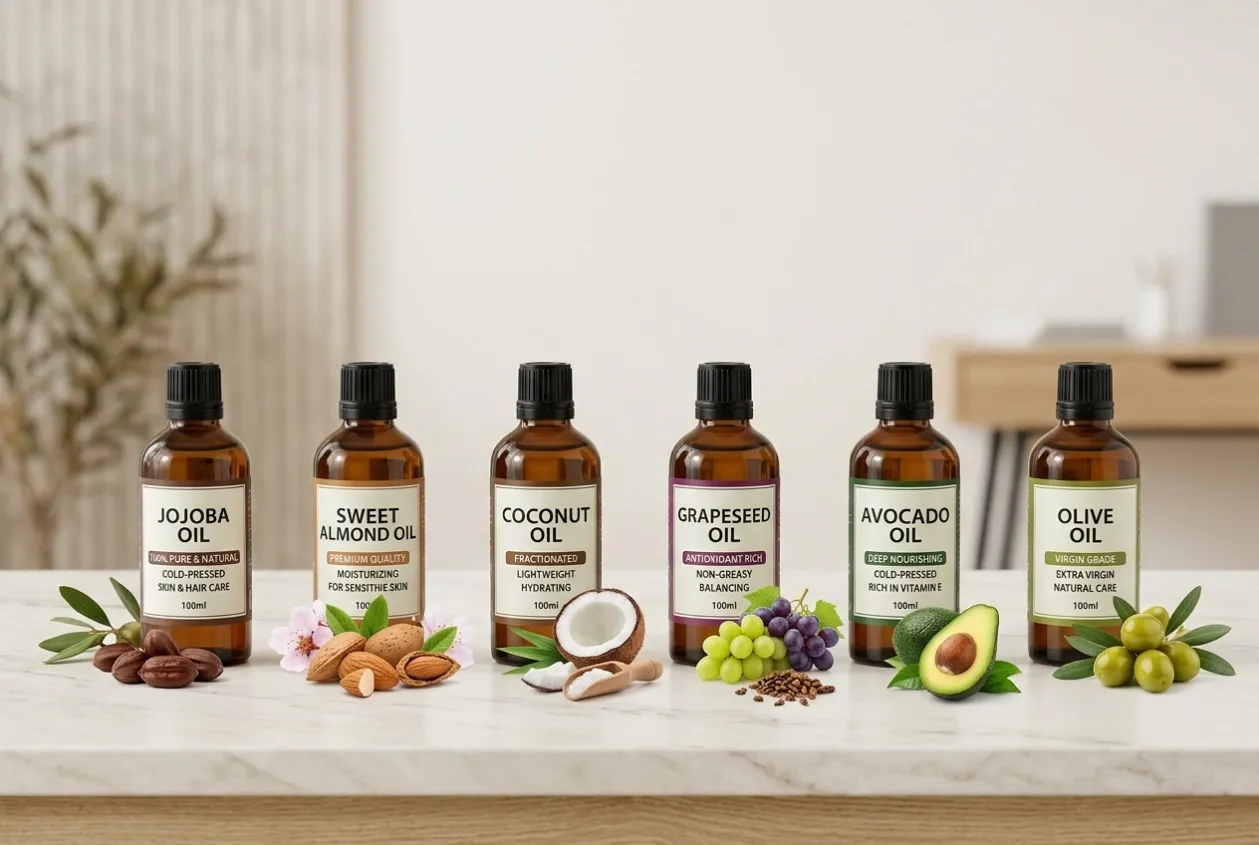
Essential oils are volatile aromatic plant materials generally used at low concentrations. Carrier oils are usually obtained from seeds, nuts, kernels, or fruits and provide dilution, emollience, glide, and skin feel.
Common carrier oils include jojoba, sweet almond, coconut, grapeseed, avocado, and olive oil. In massage, body, roll-on, and hair oils, the carrier oil strongly influences texture, spreadability, and cost, while essential oils mainly contribute aroma and product positioning.
6.B2B Purchasing Considerations
Buyers should select oils according to the finished product. Diffusers require aroma authenticity and batch consistency; cosmetics require reviews of usage levels, allergens, irritation potential, and formulation compatibility. Perfume development should focus on scent quality, note structure, stability, and lasting performance.
A professional inquiry should specify the botanical name, plant part, extraction method, origin, purity, intended application, packaging size, order quantity, and private-label requirements. Buyers may also request a Certificate of Analysis, Safety Data Sheet, GC/MS report, and allergen information.
Because natural materials vary by region, climate, harvest, and processing, samples should be approved before bulk purchasing. Both parties should agree on standards for aroma, color, composition, and other key parameters.
7.Suggested Private-Label Range
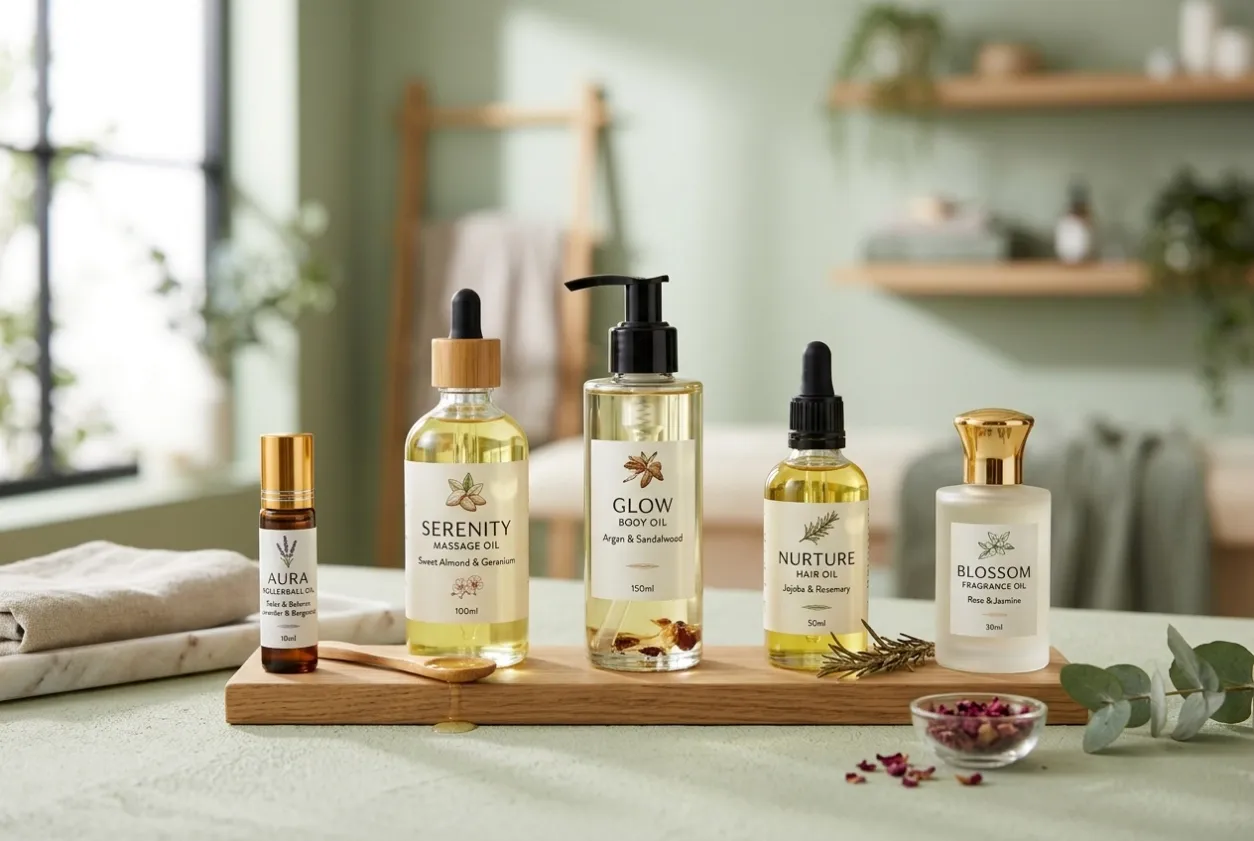
A practical product structure may include:
Core oils: lavender, tea tree, rosemary, peppermint, orange, and lemon
Carrier oils: jojoba, coconut, sweet almond, and grapeseed
Lifestyle blends: relaxation, refreshing diffusion, massage, and scalp care
Finished products: roll-ons, massage oils, body oils, hair oils, and fragrance oils
Clear specifications help suppliers provide accurate recommendations, samples, pricing, and compliance documents.
What are your thoughts on the classification of essential oils? Feel free to leave us a comment below!