Essential Oil Insights
Does the Quality of Essential Oils Depend on Their Origin?
Discover how origin, climate, plant species, harvesting, extraction, and storage shape essential oil quality, and learn practical tips for choosing authentic, transparent, reliable products from diffe
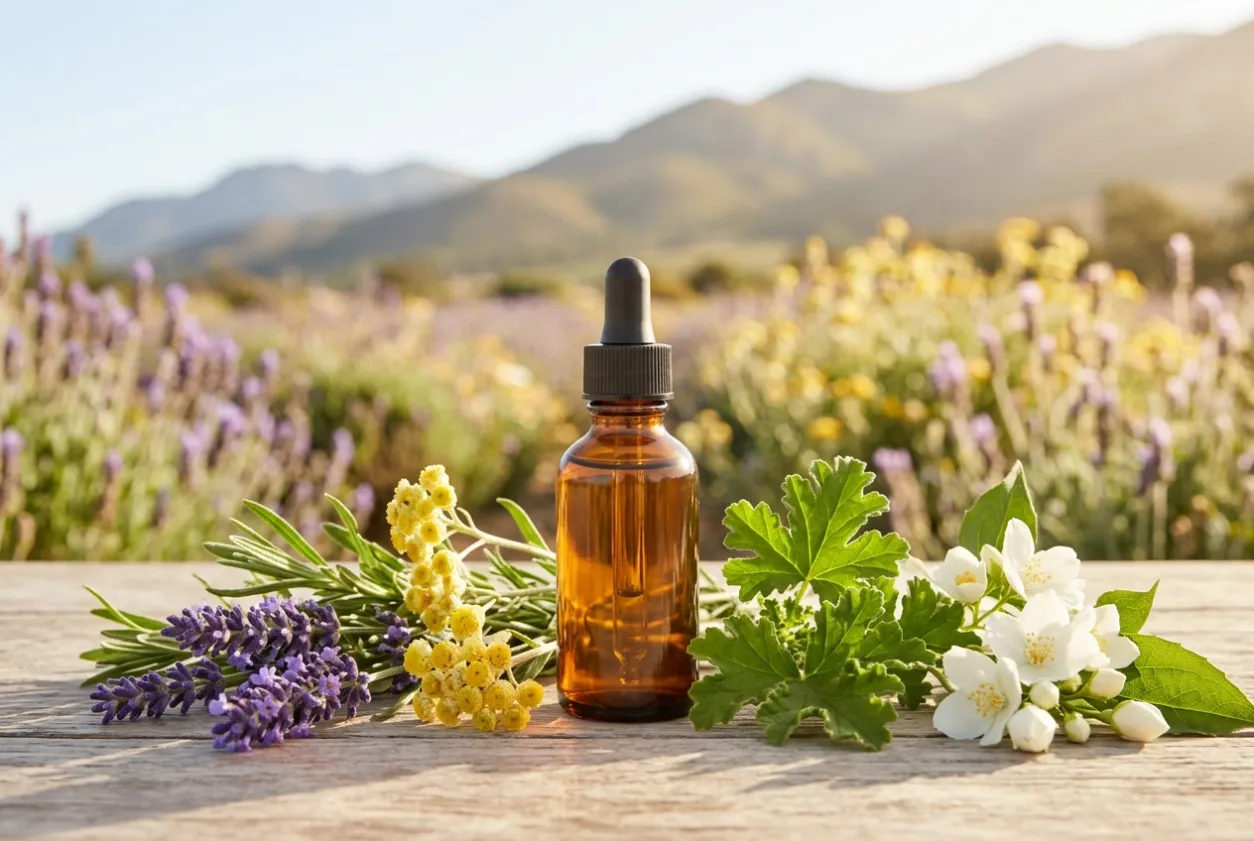
The answer is: Yes, but origin is not the only factor that determines the quality of an essential oil.
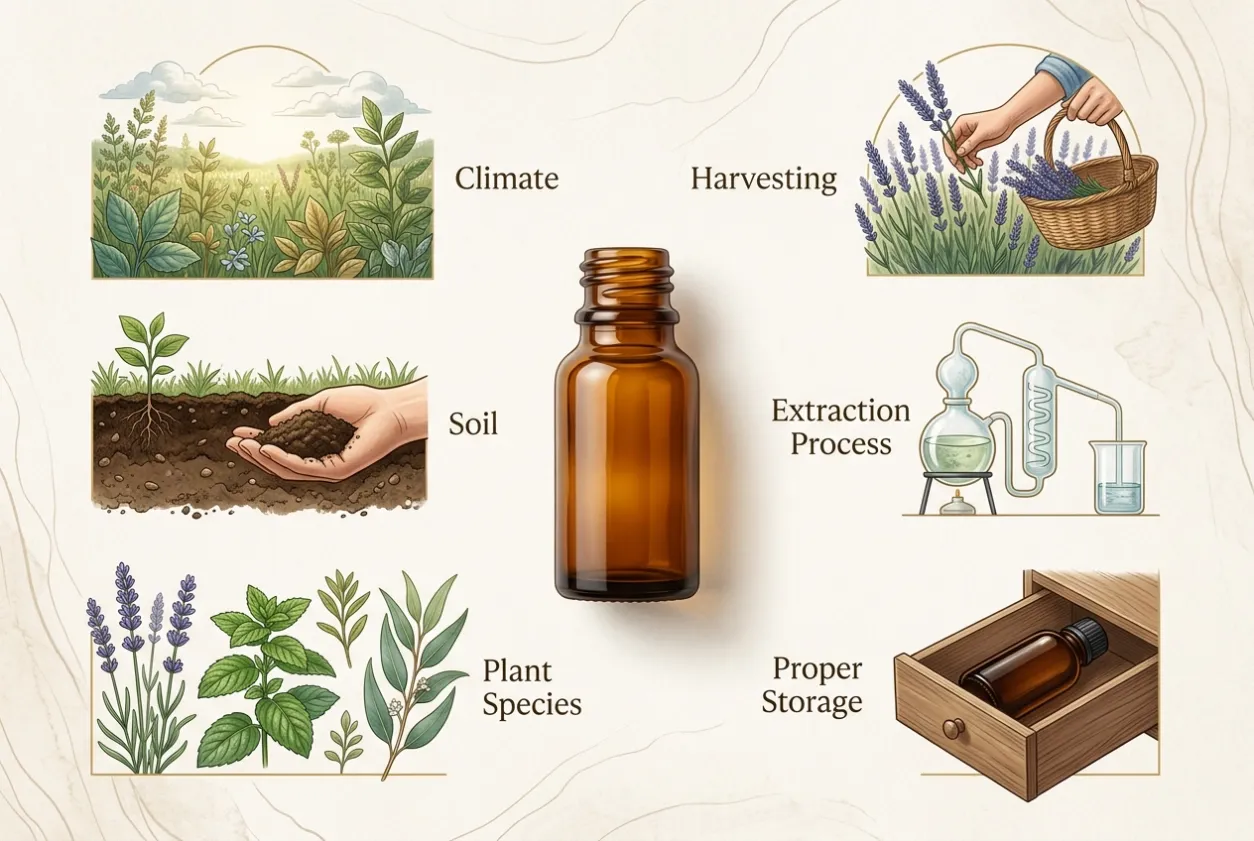
Climate, soil, altitude, sunlight, and rainfall all affect plant growth, which can influence the aroma and chemical composition of essential oils. Even oils extracted from the same plant species may have different characteristics when produced in different regions. Final quality also depends on the plant variety, harvest time, extraction method, and storage conditions.
Origin Does Not Equal Quality
A famous growing region does not guarantee that every product from it is high quality, while oils from emerging regions are not necessarily inferior. When choosing essential oils, consider the following factors:
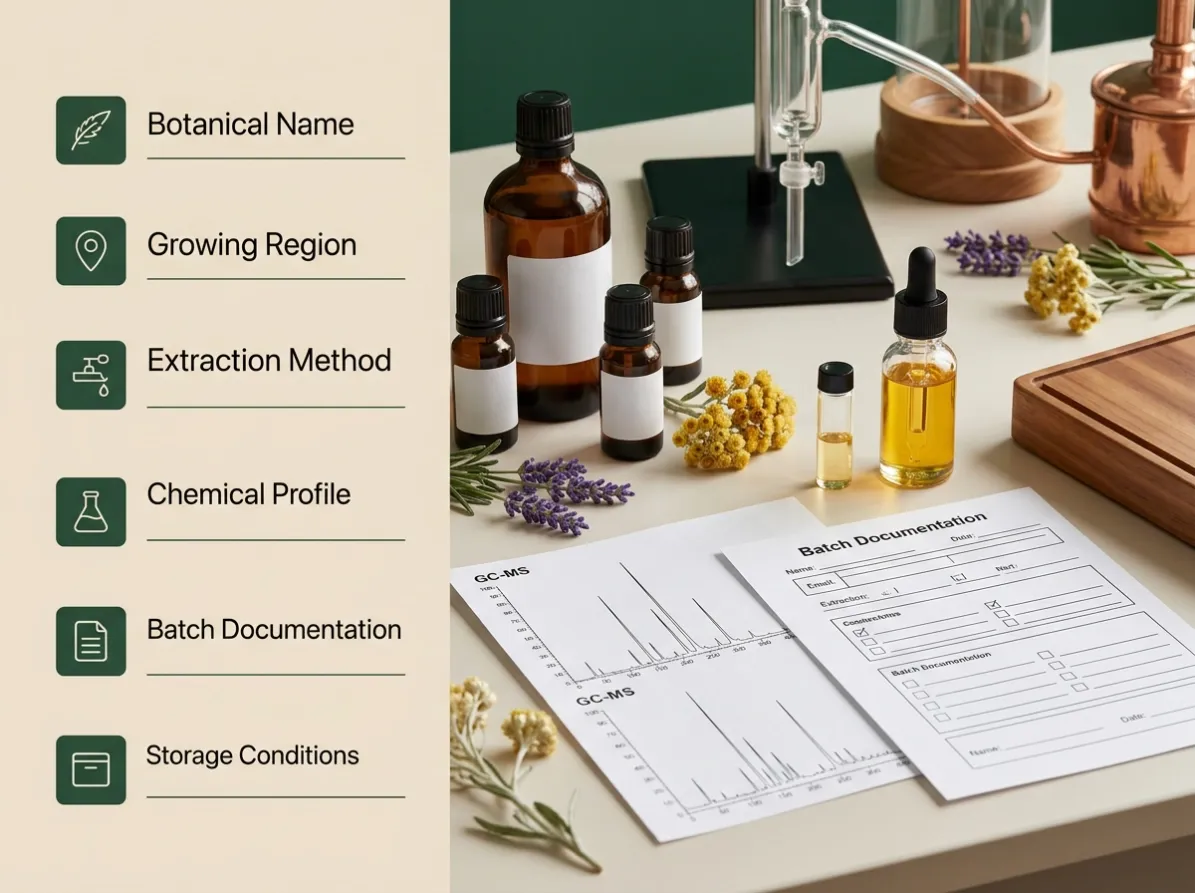
- Botanical name: This helps avoid confusion between species with similar common names, such as true lavender and lavandin.
- Plant part and extraction method: Flowers, leaves, and peels produce different oils, while distillation, cold pressing, and other extraction methods also affect quality.
- Harvesting and processing: Harvest time, raw material condition, and processing techniques influence aroma and chemical composition.
- Storage conditions: Heat, light, and air can accelerate oxidation.
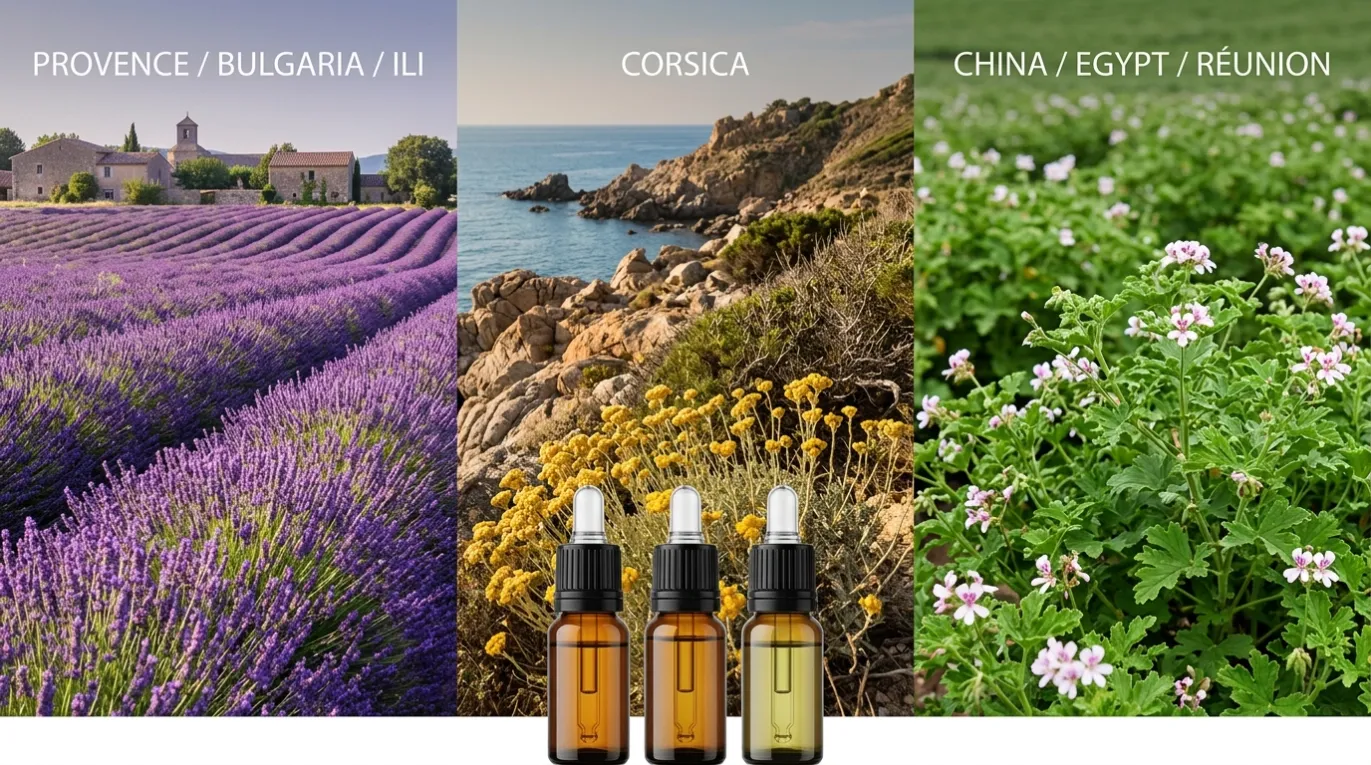
Regional Differernces Among Common Essential Oils
Lavender
Lavender from Provence, France, is known for its classic, gentle floral-herbal aroma. Bulgaria has a well-established industry for large-scale cultivation and distillation. Ili in Xinjiang, China, also has abundant sunlight, significant temperature differences between day and night, and a relatively stable cultivation and processing system.
In addition to origin, buyers should confirm the botanical name and review the levels of key constituents such as linalool and linalyl acetate.
Helichrysum
Corsica, France, is a well-known growing region for Helichrysum italicum. Its essential oil often features long-lasting herbal, honey-like, and dried-floral notes. Some batches contain characteristic compounds known as italidiones, but their concentrations vary depending on the variety, harvest time, and distillation method. Origin alone is therefore not sufficient for evaluating quality.
Geranium
Yunnan and Guizhou in China have established geranium-growing industries. Chinese geranium essential oil often has a rose-like floral aroma with herbal notes. Egypt and Réunion are also common sources. Oils from different regions may vary in their levels of citronellol, geraniol, and other constituents.
Aromatic Plants Native to China
China has distinctive growing regions and supply chain advantages for aromatic plants such as osmanthus, sambac jasmine, white magnolia, and honeysuckle. Hengzhou in Guangxi, for example, is a major jasmine-growing region, while Guilin and Xianning are known for osmanthus cultivation.
It is important to note that jasmine and osmanthus are commonly processed using solvent extraction and other methods to produce absolutes or extracts. These products are not necessarily steam-distilled essential oils in the traditional sense.
Buying Tips
- Check the specific growing region: Information such as Provence, Corsica, or Ili is more useful than the country of origin alone.
- Check the botanical name: Confirm the plant species to avoid confusion.
- Review key constituents: For lavender, look at linalool and linalyl acetate; for helichrysum, consider italidiones.
- Confirm the product type: Determine whether it is an essential oil, absolute, concrete, extract, or diluted product.
- Review batch documentation: A GC-MS report can help identify chemical composition, but it should be evaluated together with aroma and other quality indicators.
Conclusion
Origin helps shape the aroma and chemical profile of an essential oil, but true quality results from a combination of plant variety, growing environment, harvesting, processing, and storage. Rather than focusing only on famous origins, buyers should prioritize transparency, suitability, and batch-to-batch consistency.
When choosing essential oils, what matters most to you—origin, aroma, composition, or price? Which essential oil would you like to learn more about? Feel free to share your thoughts with us.