What Is the MOQ for Private Label Essential Oils? How Minimums Really Work
There is no single MOQ for private label essential oils — oil, bottle and label each have their own minimum. Learn what sets each one and how to negotiate a realistic first order.
Many new brands treat MOQ as a single number on a price list — and then wonder why the first quote comes back in a different quantity than they expected. The mistake is assuming one minimum covers the whole order. It does not.
There is no single MOQ for private label essential oils. A private label order has three separate minimums — one for the oil, one for the bottle and packaging, and one for the label — and the largest of the three sets your real starting quantity. Once you see the three parts separately, the quote starts to make sense, and you can see exactly where to negotiate.
1. Three minimums, not one
The oil. The minimum for the oil itself depends on the oil. Some oils are distilled in large batches and easy to source in small amounts; others come from a small harvest, a rare flower, or a long distillation, so the supplier can only sell them in larger batches. That is why the minimum for a common citrus oil and for a rare floral oil are rarely the same — even from the same supplier, on the same order.
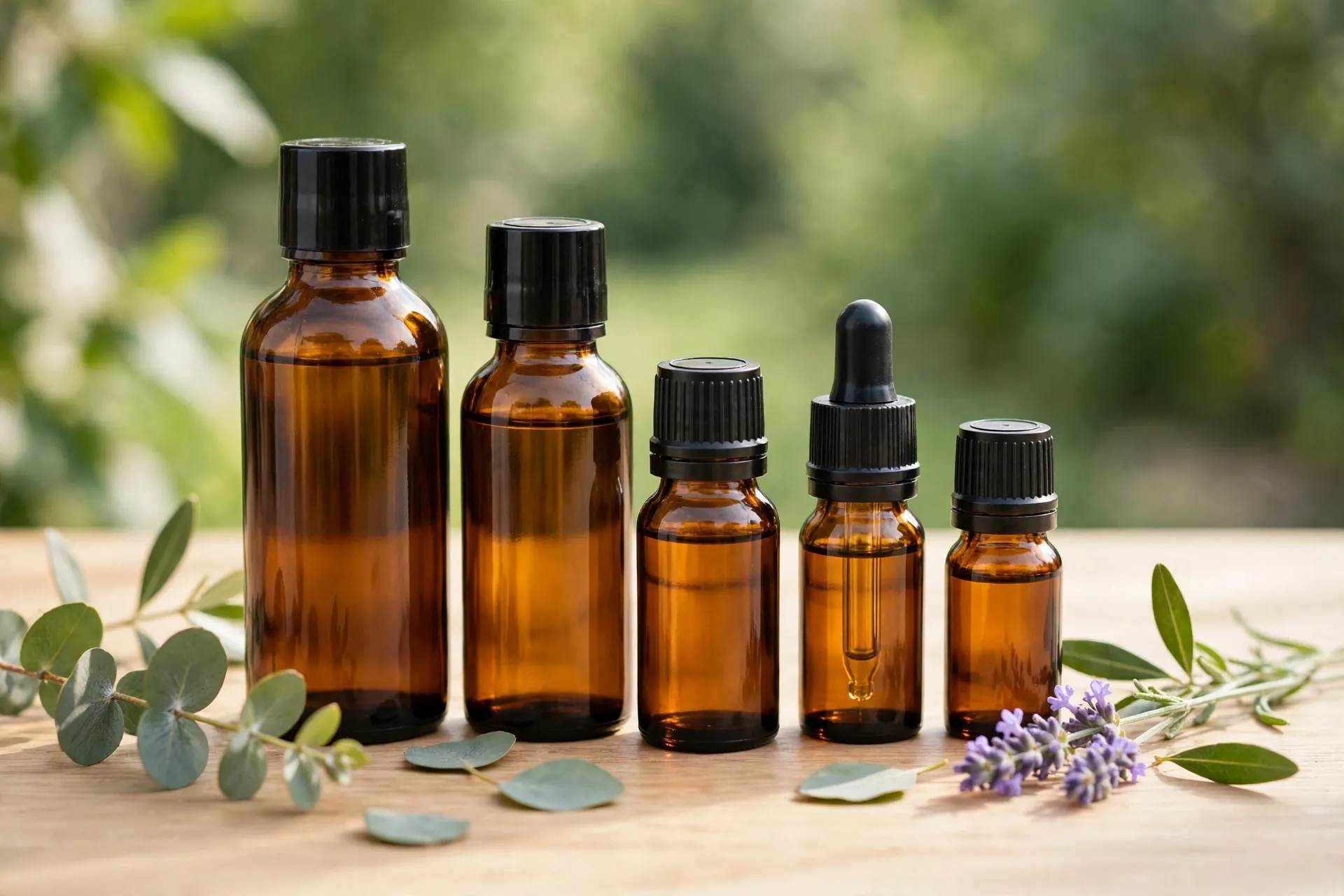
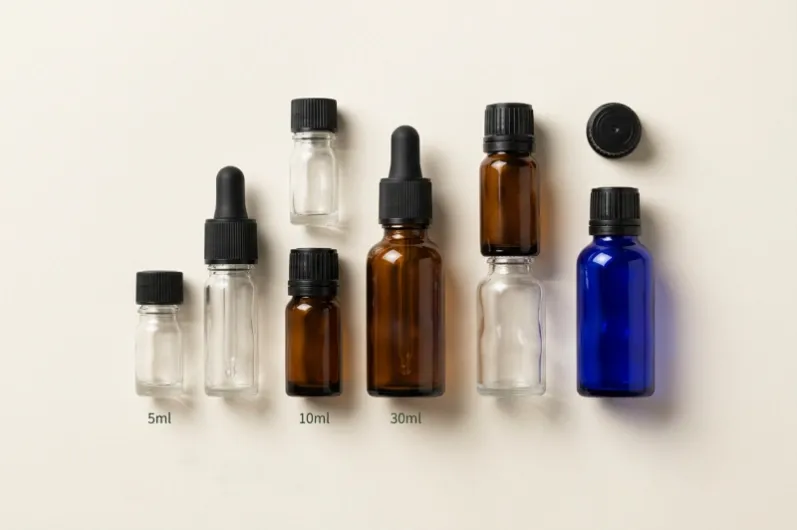
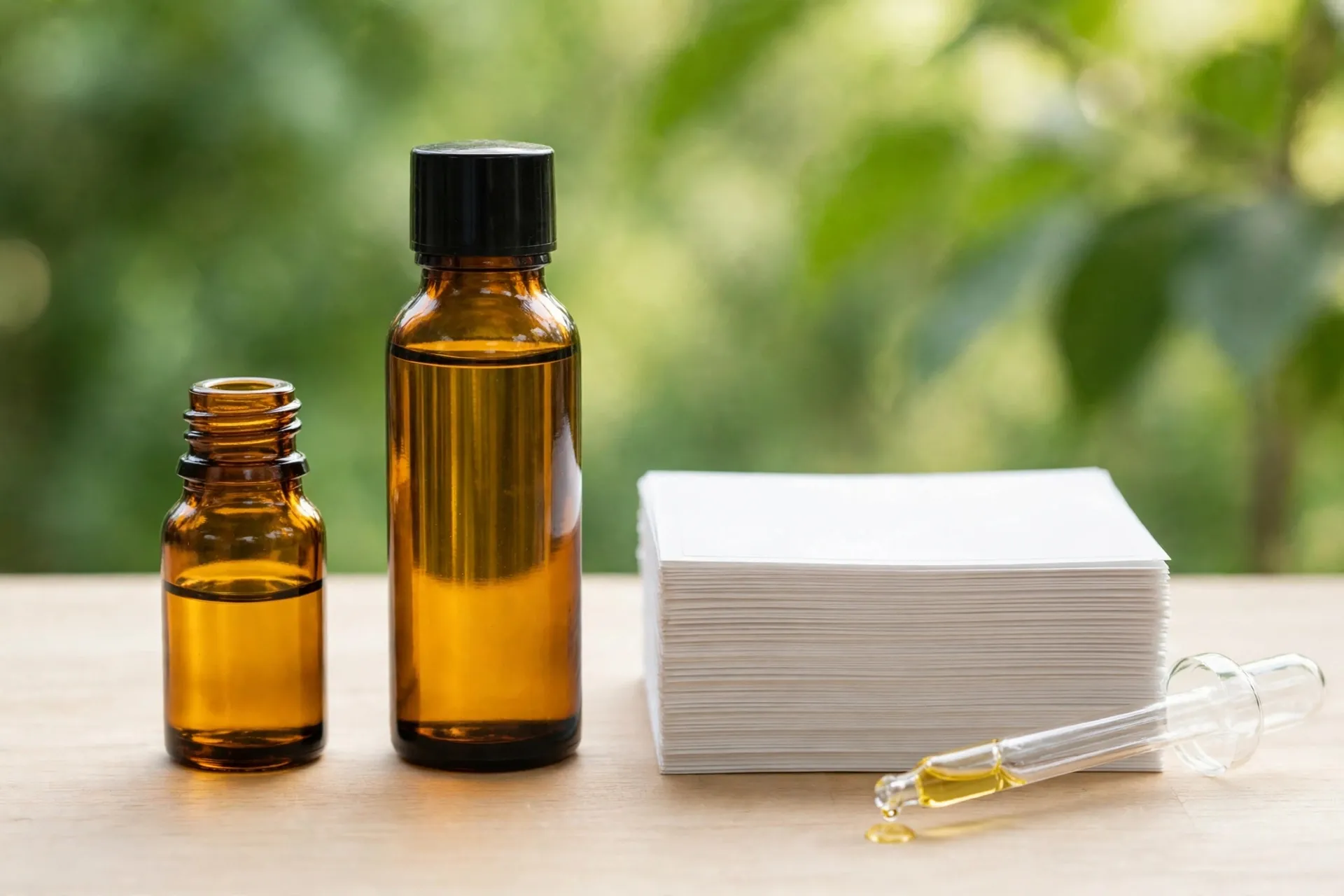
The bottle and packaging. Standard amber glass bottles in regular sizes are the easiest place to start small, because the supplier already stocks them. A custom bottle, a special cap, or a new packaging format usually needs its own production run, so its minimum is higher. The same applies to extras such as a dropper, a rollerball, or a gift box — each added part can carry its own minimum.
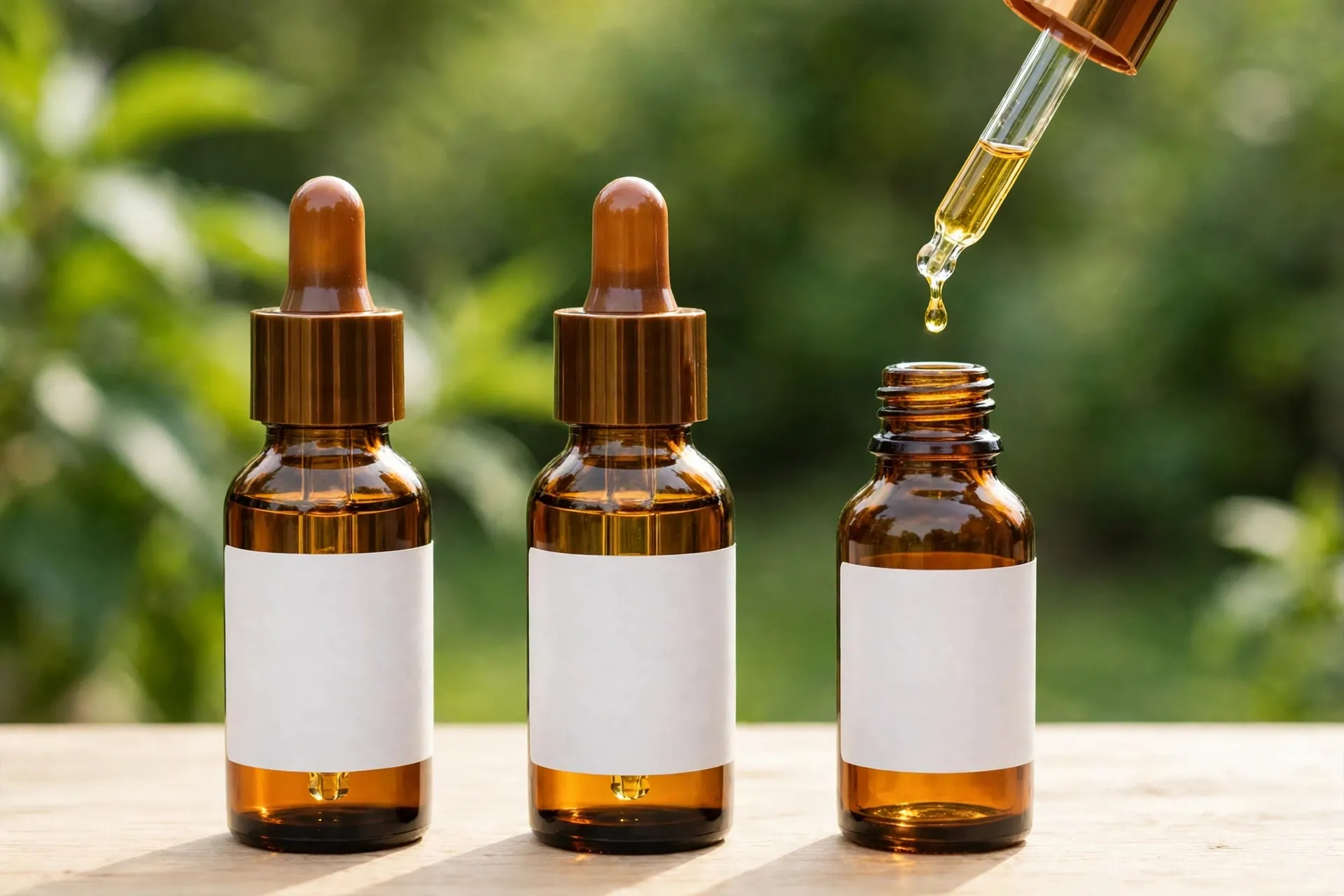
The label. Printed labels are often the part new brands forget. A label printer runs in batches, so a printed label has a minimum print run. A plain, standard layout keeps that minimum low; a fully custom label, a special finish, or several versions for several oils can push it up. Ask how the label minimum is counted — per design, or per oil — because that changes the total fast.
2. What actually sets the minimum
Three things drive most minimums, and none of them is the supplier being difficult.
First, production runs in batches. A filling line has to be set up, cleaned between oils, and checked for quality on every batch. That setup work is roughly the same whether the batch is small or large.
Second, raw materials are bought in batches too. The supplier orders oil, bottles, caps and labels from their own sources, and those sources have their own minimums. If the oil you want only comes in a certain batch size, your order cannot be smaller than that batch.
Third, custom work adds its own minimum. A custom bottle mould, a custom label design, or a custom blend formula each needs setup of its own. The more that is custom, the higher the starting quantity — and the more that stays standard, the lower it can be.
3. How to negotiate a realistic first order
You rarely need to accept the first number as a single take-it-or-leave-it figure. Ask the supplier to break the MOQ down into its three parts — oil, bottle and label — so you can see which one is actually setting the total. Often only one of the three is high, and changing that one part brings the whole order down.
Ask which parts can stay standard. Keeping a standard bottle size and a standard label layout, while customising only the oil and the label design, is usually the cheapest way to lower the minimum without giving up your brand.
Ask about starting with fewer products — one or two oils in a first order is easier to agree on than six at once.
And ask for a sample first. A sample of the exact oil, in the same quality as the bulk delivery, tells you whether the oil suits your product before you commit to a minimum order at all.
4. A realistic way to start small
A practical first order is usually one or two oils, a standard bottle size, and one label design shared across the range where possible. Add more oils and packaging options after the first order sells — not before.
Do not chase the lowest MOQ alone. A very low minimum that leaves out batch documents, testing, or proper packaging is not a bargain. Ask what the minimum includes, and compare suppliers on the whole offer, not on one number.
A short checklist to use before you ask for a quote:
- Is the MOQ quoted per oil, per bottle, or per label — or for the whole order?
- Which of the three is setting the total, and can it be changed?
- What stays standard, and what is custom — and what does each custom part add?
- Can you start with one or two oils and add more later?
- Can you test a sample of the exact oil first?
If a supplier can answer all five clearly, you have a realistic starting point. If they cannot break the number down at all, keep looking.
Start with a quote, not a guess
Browse the full range first — https://www.essentialoilsoem.com/products — then request a quote on the product page that fits your use case. Tell the supplier the oil, the quantity you have in mind, and the packaging you need. That is what a quote request needs to start, and it is the simplest way to find out what your real minimum is.
What other questions do you have about custom essential oils or purchasing essential oils? Share them with us — let's discuss together.